- Index:
- 05
- Sector:
- E-commerce & Retail
- Type:
- Web app
- Year:
- 2025
Flora & Fable Floristry
Flora & Fable is a Glasgow florist that had outgrown its previous setup. The team needed an online shop that could handle postcode-based delivery across the city, seasonal collections, gift options and accurate stock through peaks like Valentine's Day, and they needed to run it themselves without a developer on call. We designed the brand and built a bespoke e-commerce site with a self-service admin dashboard behind it.Brand identity, bespoke e-commerce storefront, postcode delivery engine, and self-service admin dashboard for a Glasgow floristry business.
Read it your way. You are reading the plain-English version. Flip to Technical for how it is built.You are reading the technical version: architecture, integrations and engineering detail.
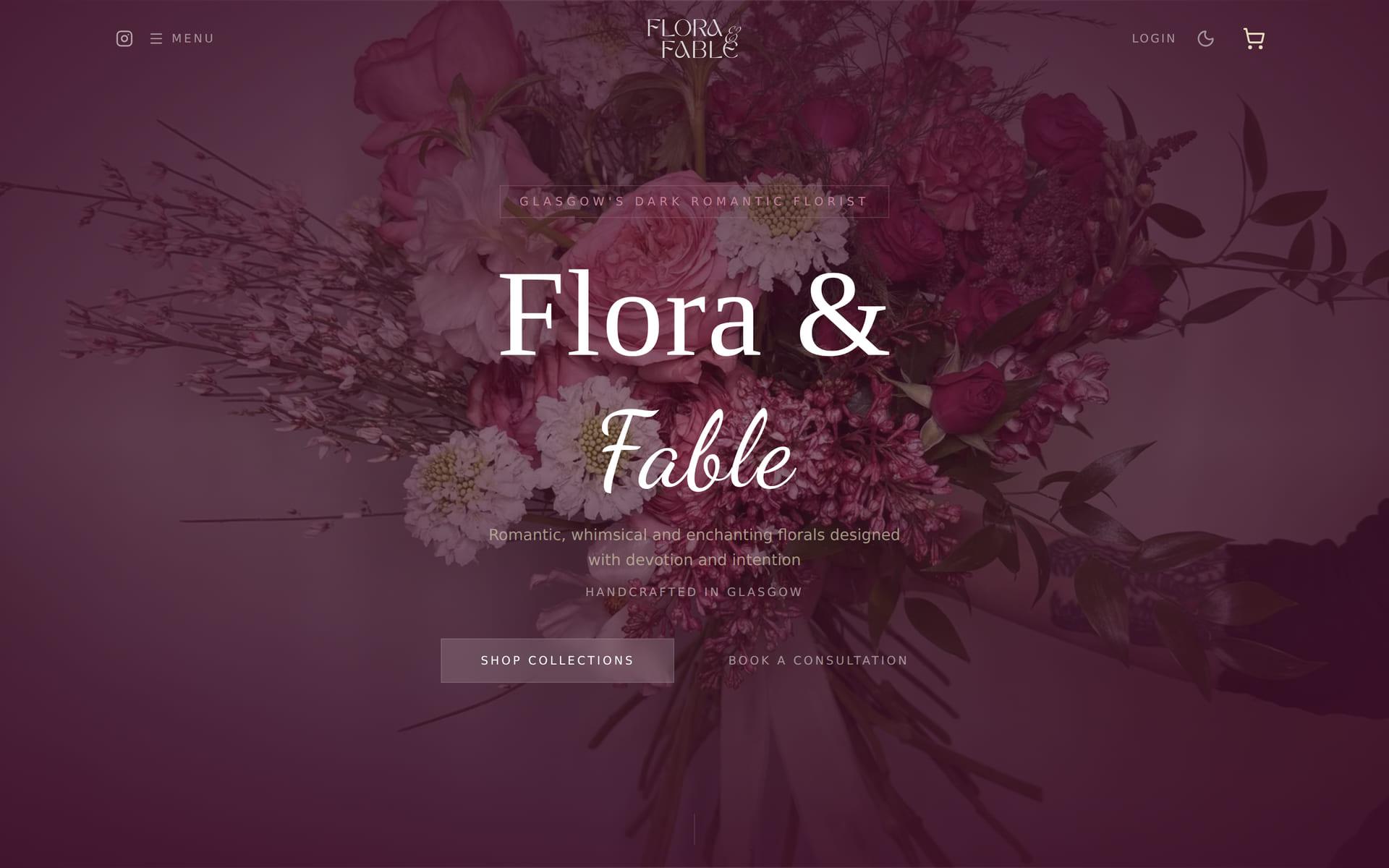
Flora & Fable Glasgow 2025
As beautiful as the flowers,and simple enough to run alone.
- Oversold orders
- 0
- Marketplace fees
- 0%
- Weeks to launch
- 12
- Self-service admin
- 100%
Chapter i The brief
They had outgrown the pot.
Order card
For Flora & Fable
Brand, shop and dashboard, in twelve weeks
Chapter ii Delivery
Will it reach them today?
A full postcode or just the first half. Try one of these:
Zone 2 · Inner Glasgow
G12 · West End
Yes, today.
Order before 13:00 for same-day delivery here.
- Delivery
- £7.50
- Morning09:00 to 12:00too late today
- Afternoon12:00 to 16:004 of 10 left
- Evening16:00 to 19:007 of 10 left
- City centre£5.00, same day by 14:00
- Inner Glasgow£7.50, same day by 13:00
- Outer Glasgow£10.00, same day by 12:00, no evening van
Schematic of Glasgow, not to scale. Sample zones, fees, cut-offs and bookings, for illustration.
input       "G12 8QQ"
normalised  "G128QQ"   // upper case, spaces and dashes out
outward     G12   (area G, district 12)
inward      8QQ
lookup      DISTRICT_ZONES['G12'] → zone 2, fee 750p
cutoff      13:00, order at 11:00 → same day
slot        morning   too-late    booked 5/10  (now + 120m prep > end - 60m)
slot        afternoon open        booked 6/10
slot        evening   open        booked 3/10
The browser runs this for instant feedback only. At checkout the server repeats the parse, the zone lookup, the cut-off and the slot capacity check, and the fee it charges comes from its own table, never from the request. Every input is a Zod schema first.
Chapter iii Valentine’s Day
The Valentine’s rush.
20 bouquets of The Red Edit left. 36 people about to press buy.
- paying
- bouquet
- paid, no bouquet
- sold out
- charged twice
| Measure | The old way | Our shop |
|---|---|---|
| Orders taken | 41 | 20 |
| Left on the shelf | -21 | 0 |
| Paid, but no bouquet | 16 | 0 |
| Charged twice | 5 | 0 |
| Told at once it had sold out | 0 | 16 |
Sample simulation with invented shoppers and timings, for illustration.
Open the doors to stream the requests.
You never sell a bouquet you do not have.
The old way looks at the shelf when you press buy, then takes your money a moment later. Everyone who pressed buy in that moment saw a bouquet that someone else was already paying for. Our shop takes the bouquet off the shelf at the very instant you press buy, one customer at a time, so the count can never go below zero. Press the button twice and you still get one order and one charge.
-- 1. Look at the shelf
SELECT stock FROM product_variants WHERE id = $1;   -- 3, fine

-- 2. Take payment (a second or so, while others read 3 too)

-- 3. Write the order
UPDATE product_variants SET stock = stock - 1 WHERE id = $1;
INSERT INTO orders (...) VALUES (...);  -- a retry is a new order
BEGIN;
SELECT stock FROM product_variants
 WHERE id = $1 FOR UPDATE;              -- row lock, others queue

UPDATE product_variants
   SET stock = stock - $qty
 WHERE id = $1 AND stock >= $qty
RETURNING stock;                        -- no row: sold out, roll back

INSERT INTO orders (idempotency_key, total_pence, ...)
VALUES ($key, $server_total, ...)       -- priced from the database
ON CONFLICT (idempotency_key) DO NOTHING
RETURNING id;                           -- a retry finds the first order
COMMIT;
Illustrative SQL showing the pattern, not the client’s schema.
Chapter iv Gifting
Make it a gift.
Sample codes: FABLE10, WELCOME5, SPRING24.
Flora & Fable
Happy birthday, Mum. Thirty years of Sunday phone calls and I still want more.
with love
- Classic bouquet
- £56.00
- Gift wrap and ribbon
- £4.00
- Handwritten card
- Free
- Delivery, zone 2, afternoon
- £7.50
- Total
- £67.50
Sample sizes, prices and codes, for illustration.
{
  "items": [
    {
      "variantId": "bouquet_classic",
      "addOns": [
        "gift_wrap"
      ],
      "cardMessage": "Happy birthday, Mum. Thirty years of Sunday phone calls and I still want more.",
      "quantity": 1
    }
  ],
  "delivery": {
    "postcode": "G12 8QQ",
    "slot": "afternoon"
  },
  "discountCode": null,
  "idempotencyKey": "c1e4…9b2f"
}
No prices travel from the browser. The server parses this with Zod, looks every id up, reprices the lines, re-validates the code against its expiry and usage limit, zones the postcode, checks slot capacity, and only then creates the Stripe Checkout session with its own total (6750 pence here). The cart itself lives in a persisted Zustand store, so it survives a refresh.
Chapter v The dashboard
The owner’s side.
The owner. Everything, including who else gets a login.
Collections
- live
- off
- off
Products
The Plum Posy
Everyday
£42.008Hedgerow Hand-tie
Everyday
£56.003The Red Edit
The Valentine's Edit, not on the shop
£72.0020Blush and Bow
The Valentine's Edit, not on the shop
£48.0012First Light Tulips
Spring Market, not on the shop
£38.0015
Changes save straight away and show on the shop front.
A cut-down copy of the dashboard with a sample catalogue and prices, for illustration.
Everyday
The Plum Posy
£42.00
- Only 3 left
Everyday
Hedgerow Hand-tie
£56.00
| Action | Owner | Manager | Staff | Viewer |
|---|---|---|---|---|
| See orders and sales | ||||
| Change stock, mark sold out | ||||
| Change prices | ||||
| Switch collections on and off | ||||
| Create discount codes | ||||
| Add and remove team logins |
The four roles as built. Which tasks sit with which role is simplified here.
-- One of the policies on products (illustrative)
create policy "staff update stock only"
on product_variants for update
to authenticated
using  (auth_role() in ('owner', 'manager', 'staff'))
with check (
  auth_role() in ('owner', 'manager')
  or (price_pence = (select price_pence from product_variants v
                      where v.id = product_variants.id))
);
Illustrative policy, not the client’s schema. The pattern: a role claim resolved server-side, a using clause for which rows a role may touch and a with check clause for what it may write, so staff can change stock but a price change from a staff session fails at the database.
No developer needed.
New season, new collection: switch it on in the morning and it is in the shop window by the time the kettle boils. A bouquet runs out: one tap and nobody can order it. And because the Saturday florist cannot change a price by accident, the owner does not have to hover.
Chapter vi The shop as built
Pressed and framed.
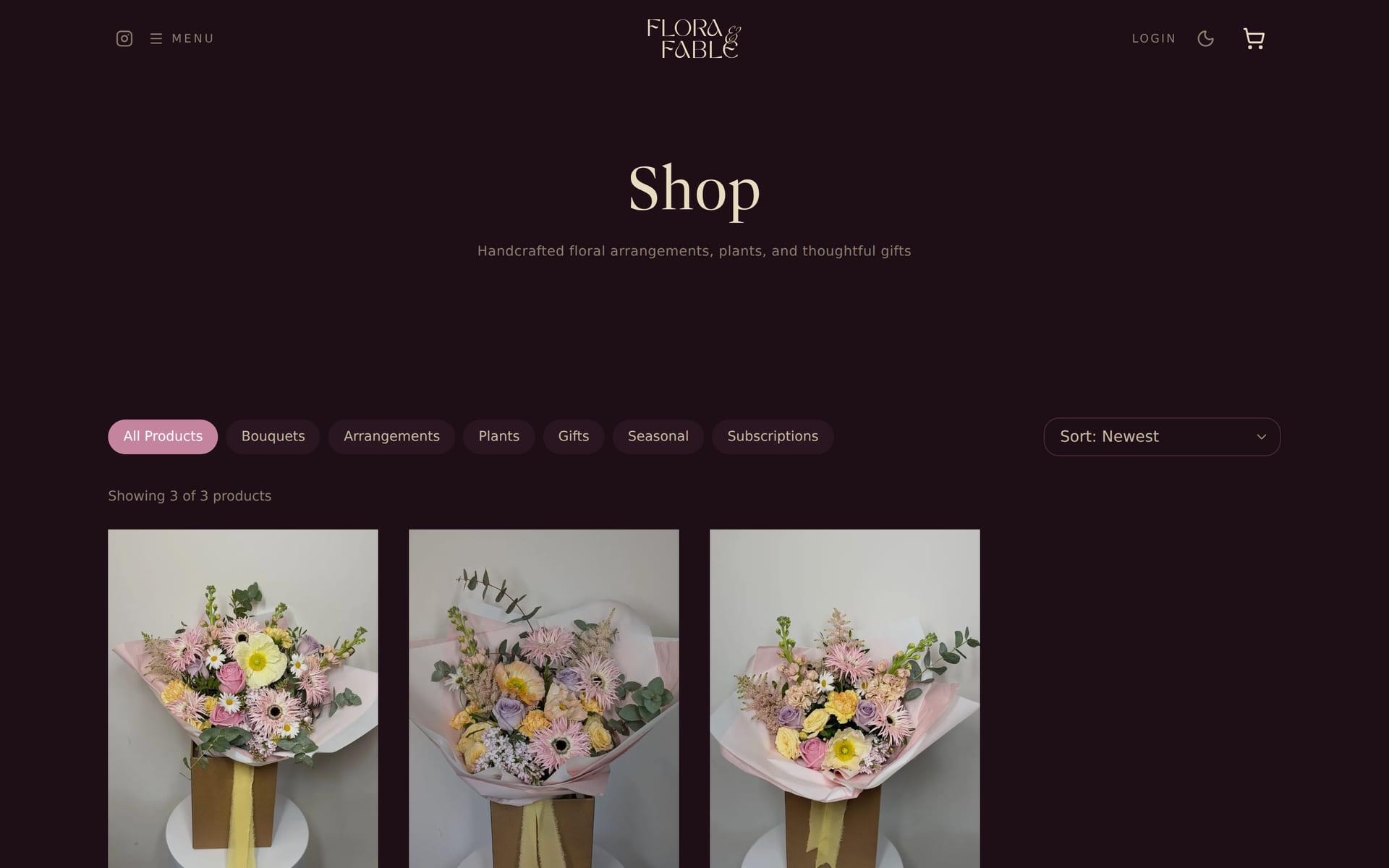

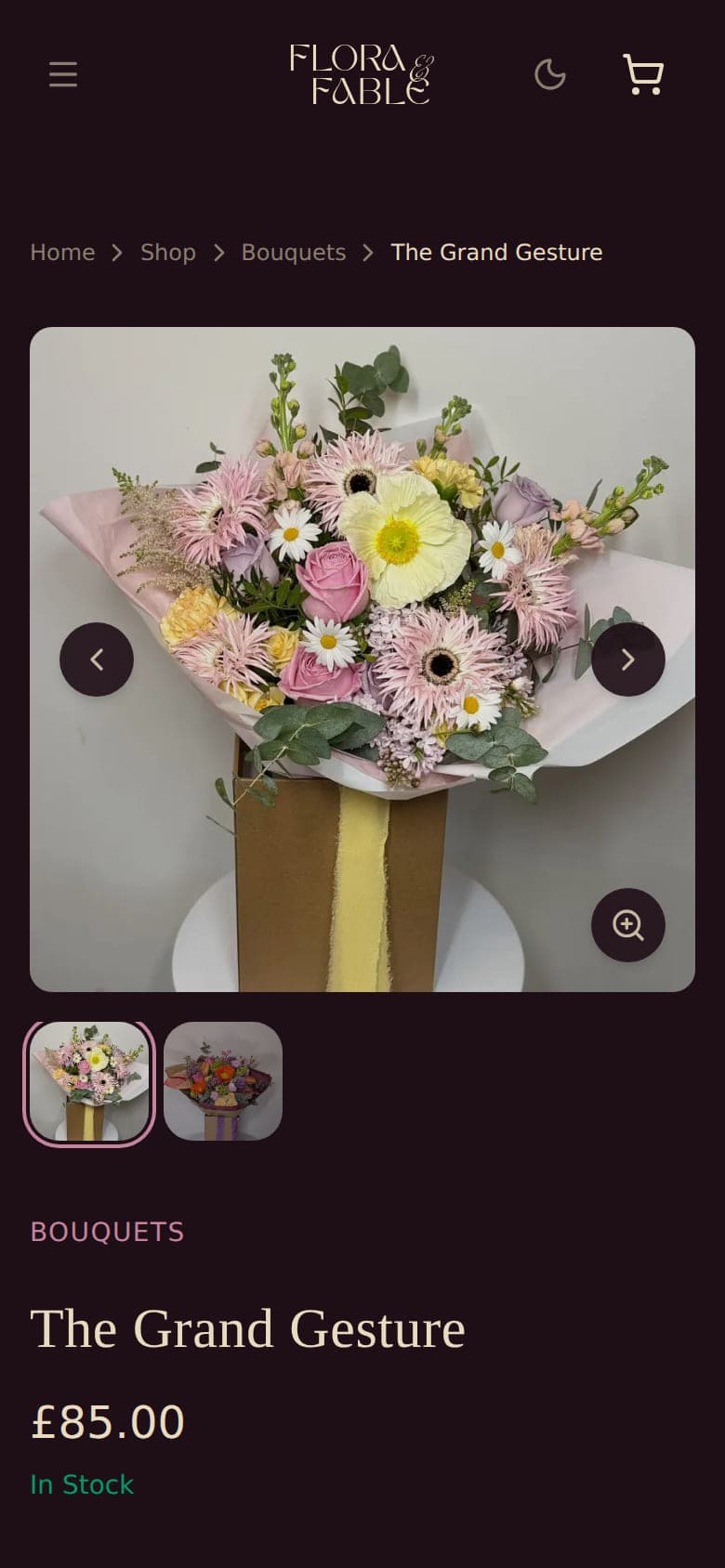
The palette
- Plum
- Plum light
- Tan
- Sage
- Paper
What the brand includes
- A logo in light and dark versions, for the web and for printLogo design with light and dark variations for web and print
- A botanical colour palette and a set of typefaces to matchBotanical colour palette and typography system
- Reusable building blocks, so every page looks like it belongsComponent design system with reusable tokens for consistent styling
- Gentle movement on pages and buttons, never in the wayAnimated interaction patterns using Framer Motion
Screens from the finished shop at floraandfable.co.uk.
- 01The team changes products, orders, collections and pages themselves, from their own dashboard, with no developer to call.The team manages products, orders, collections, and content entirely through the dashboard, zero ongoing developer support needed
- 02Customers see the delivery fee and choose a time slot from their postcode before they pay.Postcode-based delivery zones with time slot booking reduced delivery errors and customer service queries
- 03Valentine's collections are set up in advance with stock limits and a checkout that cannot charge anyone twice.Scheduled Valentine's Day collections with stock safeguards and idempotent checkout ensured a smooth, high-confidence trading period
- 04No bouquet is ever sold twice, even when lots of people buy at the same moment.Atomic stock operations with row-level locking eliminated overselling, even under concurrent demand
- 05No marketplace fees: the customers and the orders belong to the shop.Zero marketplace fees, the business owns their entire customer relationship and revenue stream
Need a web app?
If your business needs a web app like Flora & Fable Floristry's, tell us about it. We reply with a fixed written quote after a short discovery call, so you know the price before any work starts.
Web app from £8,000
Prices, timelines and what is included: Web app development in Glasgow.
Studio: Unit 204b, 36-38 Washington Street, Glasgow G3 8AZ. Phone 0141 345 5841.
The architecture, integrations, performance numbers and code standards behind this project live in the technical version, for whoever looks after your IT.
Brand identity, bespoke e-commerce storefront, postcode delivery engine, and self-service admin dashboard for a Glasgow floristry business.
- Framework
- Next.js 16 with React 19, App Router, and Turbopack
- Database
- PostgreSQL via Supabase with 15 tables, row-level security on every table
- Authentication
- Supabase Auth with four-tier RBAC, owner, manager, staff, viewer
- State Management
- Zustand with persistence for cart state and checkout progress
- Styling
- Tailwind CSS 3.4 with CSS custom properties, Framer Motion for animations
- Validation
- Zod schemas for all inputs, forms, API payloads, and environment variables
- Payments
- Stripe Checkout with server-side price validation and idempotent order creation
- Resend with React Email templates for order confirmations and delivery notifications
- Storage
- Supabase Storage for product images and gallery content with signed URLs
- Testing
- Playwright end-to-end tests covering checkout, delivery, and admin workflows
- Stock Integrity
- Atomic operations with row-level locking, zero overselling under concurrent demand
- Payment Safety
- Idempotent order creation prevents duplicate charges, even during retries
- Peak Readiness
- Valentine's Day load tested, stock safeguards and checkout validated under pressure
- Delivery Validation
- Server-side postcode verification, zone calculation, and slot capacity checks
- →TypeScript strict mode with noUncheckedIndexedAccess
- →Row-level security on all 15 database tables
- →Zod validation on every API input and form submission
- →Playwright end-to-end test coverage for critical flows
- →Immutable state patterns throughout with Zustand
- →Server-side price validation, no client-trusted pricing
- Next.js 16
- TypeScript
- Supabase
- Stripe
- Tailwind CSS
- Framer Motion
- Zustand
- Zod
- Resend
- Playwright
Questions about Flora & Fable Floristry
What did Glasgow GFX build for Flora & Fable?
Flora & Fable is a Glasgow florist that had outgrown its previous setup. The team needed an online shop that could handle postcode-based delivery across the city, seasonal collections, gift options and accurate stock through peaks like Valentine's Day, and they needed to run it themselves without a developer on call. We designed the brand and built a bespoke e-commerce site with a self-service admin dashboard behind it.
How is it built, in plain terms?
A custom online shop with card payments through Stripe, a managed database behind the orders, and safeguards so a product cannot be sold twice during a rush.
What changed for Flora & Fable?
Zero oversold orders, zero marketplace fees, and a shop the team runs entirely through its own dashboard.
How long did the project take?
12 weeks.
How much does a web app like this cost?
Web app projects start from £8,000. We reply with a fixed written quote after a short discovery call, so you know the price before any work starts.
Where is Glasgow GFX based?
Our studio is at Unit 204b, 36-38 Washington Street, Glasgow G3 8AZ, and we work with businesses across the UK. Phone 0141 345 5841.
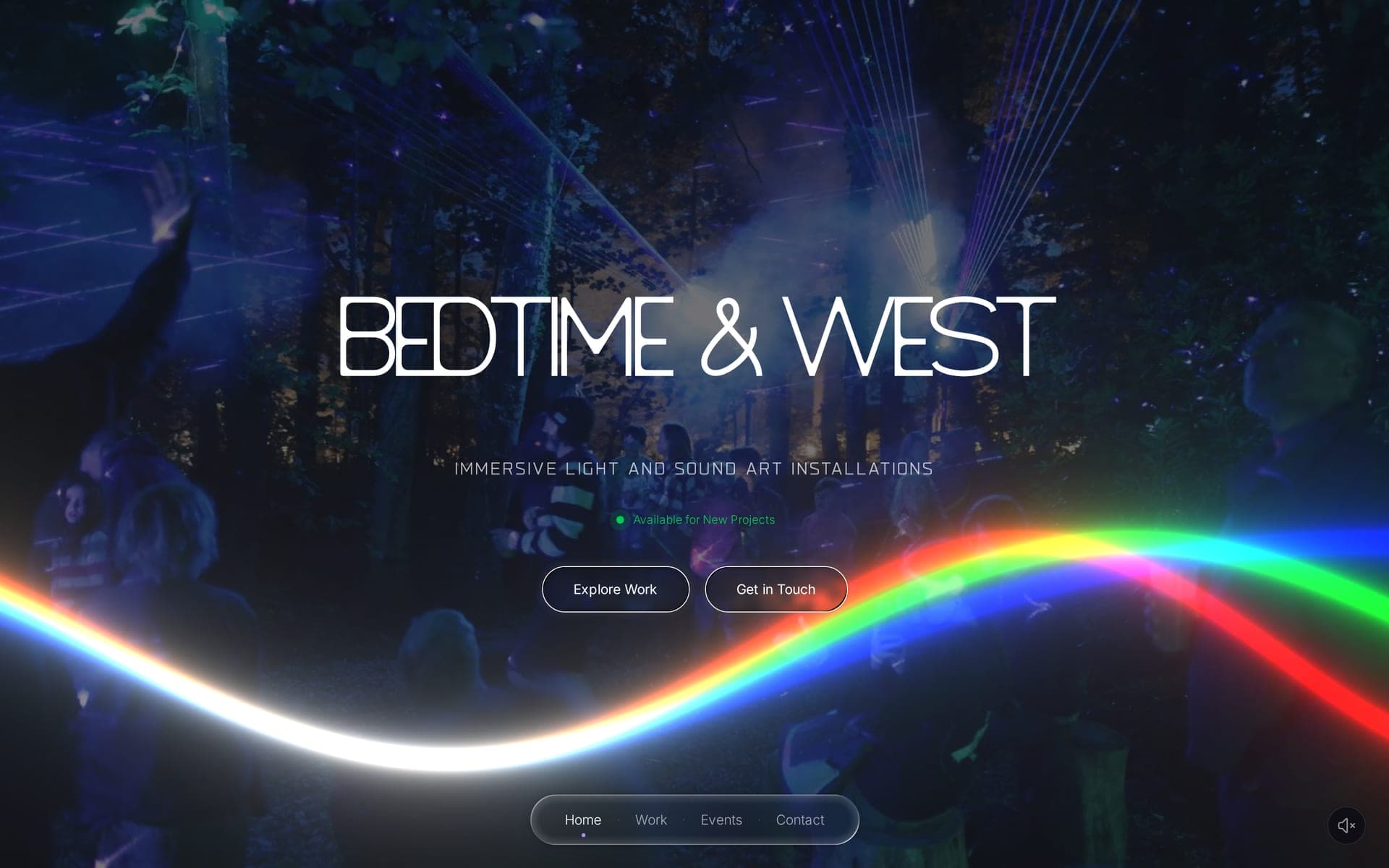
Bedtime & West
An Astro site with React islands for a light and sound art duo: festival footage under three audio-reactive WebGL shaders, a Howler soundtrack split into bass, mid and treble bands that drive the visuals, and installation content kept as typed, schema-checked files.
Have a project?
Websites, web apps and bespoke software for businesses across the UK, built in Glasgow. Tell us what you need and we will come back with a fixed written quote after a discovery call.
Glasgow GFX Studio
- Visit
- The Pentagon Business Centre
Unit 204b, 36-38 Washington Street
Glasgow G3 8AZ - Call
- 0141 345 5841
- Hours
- Mon to Fri 9:00 to 18:00
Sat 10:00 to 18:00
Sun closed - Clients
- Web and software clients across the UK, from the Washington Street studio in Glasgow.